A few people find this blog with searches like “how to refill mechanical pencil” or “refill instructions for mechanical pencil” so here’s a few hints, in the name of public service.
Older Pencils
Most of the pencils from the 1930 – 1970 era are screw mechanisms where the lead is advanced by winding part of the pencil around to advance and retract the lead. Spare leads are often stored inside the body of the pencil, but its just storage, you refill the lead through the tip or other part of the pencil.
Here are a few instructions that I know of. I think you’ll see the common themes and be able to work out how to refill most common older pencils from these examples. These are full transcriptions from manufacturers’ leaflets, and they are all screw mechanisms.
CONWAY STEWART
1940 – 1960 era instructions.
“When lead has been ejected, wind mechanism back and insert new lead through point, making sure lead is fitted into socket on end of propelling rod. Lead will then be gripped so that it will propel and repel.”
PARKER
From 1950 – 70 era leaflets.
"TO INSERT NEW LEAD: Turn cap to the right until metal piece emerges from the tip to be sure all the old lead is out. Turn cap back until its stops. Insert new lead completely into the point. Press the end of the lead gently on a hard surface to secure the lead in the pencil."
SHAEFFERFrom a 1980’s leaflet. Actually it’s all diagrammatic so I have written this interpretation.
"Turn mechanism until remaining lead is expelled, and then turn mechanism back until it finally stops. Hold pencil point upwards and insert a piece of lead into tip and feed it all the way in. Turn pencil over and gently press lead down on flat surface to fully seat it home." (Note the similarity to the Parker instructions)
WAHL EVERSHARP

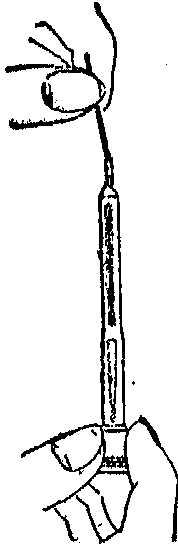
From an English 1930 - 40’s era leaflet for a propel only pencil, i.e. you can’t wind the lead back in. It’s a bit complicated but the diagram should help. If you’re desperate I can send you a PDF of the full instructions sheet which has more pictures, and is a bit easier to read.
“Lead is exhausted when turning cap to right fails to propel more lead. Inner mechanism has been released and can be pulled straight out without unscrewing. To insert new lead push plunger all the way down, while holding mechanism upright and insert new lead in tapered end (see diagram). Slip barrel down over mechanism and turn cap to right until lead feeds out.”
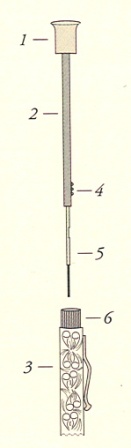
YARD-O-LEDFrom a modern YOL booklet, but the older styles are similar. Again it’s a bit complicated but the diagram should help.

“Pull out the cap section (1) and turn in an anti-clockwise direction until the slider (2) is completely unscrewed from the barrel (3). Push the slider grip (4) along to expose the lead holder (5) and any remaining lead. To release any residual lead, hold the slider grip firmly between thumb and forefinger and push down towards the slider grip. The resulting spring action will release the lead. Unscrew the refill nut (6) and remove a spare lead from inside the barrel. Replace refill nut.
Insert the new lead into the lead holder, ensuring it is pushed fully into place. (Failure to push the new lead right into the holder may cause it to move up and down when writing). Move the slider grip back along the slider towards the cap section and insert the whole slider mechanism into the barrel. Screw the cap section back over the refill nut, then turn the cap clockwise until lead appears at the tip of the pencil”
Complicated or what!
Modern Pencils
Well compared to all that, refilling most modern pencils is a breeze - pull the end off and stick some leads in. Thats it.
Or if it’s a complicated one you pull the end off, then the eraser under that, and then stick some leads in. You can usually fill the centre tube up with quite a few leads and they will automatically feed in as the old one runs out.
Unfortunately there are some modern pencils that are “disposable” and not meant to be refilled. The Papermate Advancer and the Dixon Sensematic are probably the leading non-refillable mechanical pencils; although I think the latest Sensematics are now refillable?
Then there are a few modern pencils like the Faber-Castell E-motion and the Retro 51 Tornadoes which are basically “old style” screw mechanisms and refilled like the (Parker / Shaeffer) older style pencils above. The manufacturers’ websites should have instructions, particularly the manufacturers US market website.
If you have got a lead jam, check out the sidebar link on
clearing a jammed pencil.


 Anyway, here’s some old Atlas leads I recently acquired. Brand new old stock still in their original boxes. The leads are ‘super fine’ size, that’s 1.18mm diameter, which isn’t exactly super fine by today’s 0.3 and 0.2mm standards. There are 12 sticks per tube. The tubes are glass with black plastic stoppers.
 Things weren’t so voluntarily standardised in the old days, when there was quite a selection of lead lengths. My two boxes are two of the common older lengths. The long ones are 100mm (4 in.) long, and the short ones are 32mm (1 and ¼ in.) long.
 I like the idea of how the box for the long tubes has had its cardboard base cut and flaps folded in to act as dividers and protectors for the tubes. You can see the flaps between the tubes in the photo below.
 “Atlas”, The Best Quality Refill Leads, Made In England.


 Posts
Posts


